



How to Keep Your Brand Top of Mind
When Customers Are Drowning in Holiday Emails
The inbox in December isn’t a communication tool—it’s a full-contact sport. Every brand, from the global megastore to the local dog bakery, is shouting their way into people’s attention span with flashing subject lines, endless exclamation points, and “40% OFF” hysteria that blurs into static. Consumers don’t read; they scan for relief.
According to Mailjet’s 2024 BFCM report, holiday email volume jumps nearly 80% between Thanksgiving and Christmas, while average open rates drop to 13–15%—a statistical cry for help. But the real problem isn’t quantity—it’s tone. Every brand is talking at their audience instead of with them. The louder the messaging, the less people listen. Leading with prices and panic doesn’t inspire trust; it triggers fatigue.
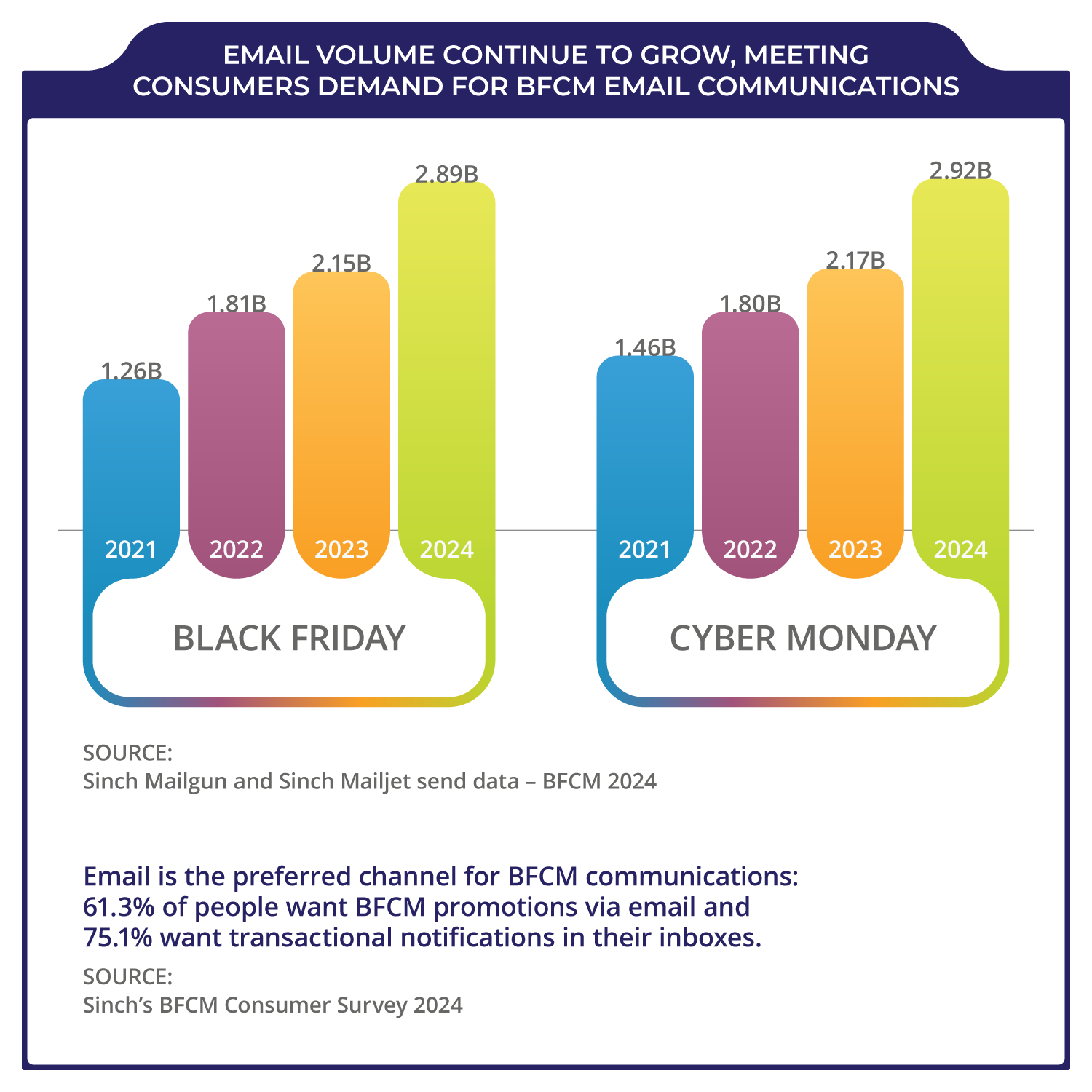
That’s your opportunity. The brands that win the inbox aren’t the ones who yell the loudest—they’re the ones who sound human. In a season where everyone is trying to sell, you stand out by communicating. A well-crafted email that feels like a conversation—grounded in empathy, clarity, and timing—can still stop a scrolling thumb cold.
Your Subject Line and Sender Are Your First Impression—Use Them Wisely
Your email has three seconds to make a first impression. Before your content even loads, three decisions determine whether it lives or dies: the sender name, the subject line, and the teaser (preheader) text.
Sender name: It should always be the winery, not a person or a department. “From: Peju Winery” builds credibility. “From: Sarah at Peju” feels like a cold pitch. The name needs to evoke authority and trust at a glance.
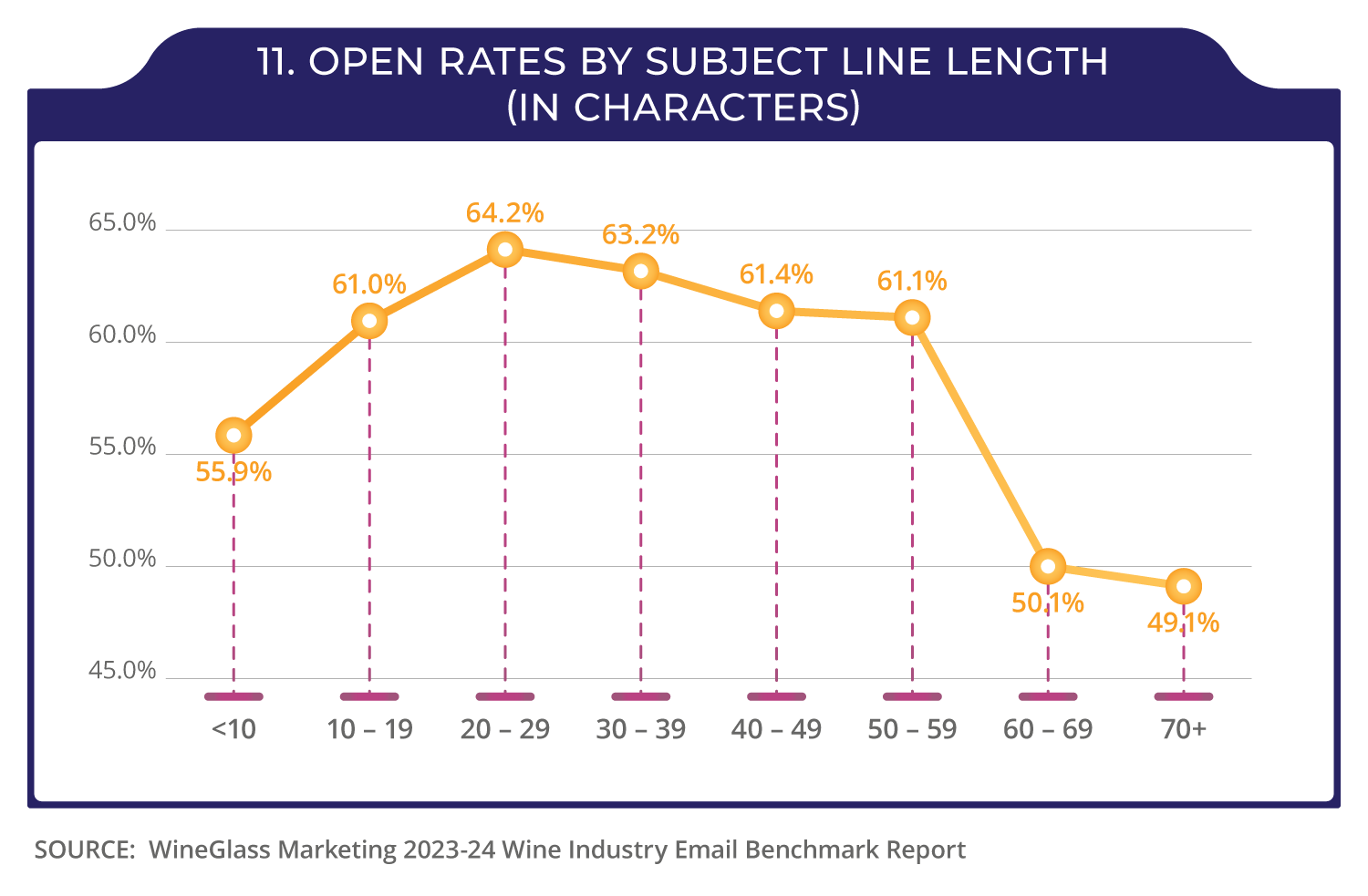
Subject line: This is where most brands implode. The temptation is to cram urgency, emotion, and discount all at once. Don’t. Subject lines work best when they’re concise, conversational, and useful. Our 2024 benchmark study showed that after 59 characters results fall off a cliff – so keep it brief.
Examples that work:
- “Your host gift, handled—ships by Dec 18.”
- “A bottle worth opening together.”
- “Last day for guaranteed delivery—make it sparkle.”
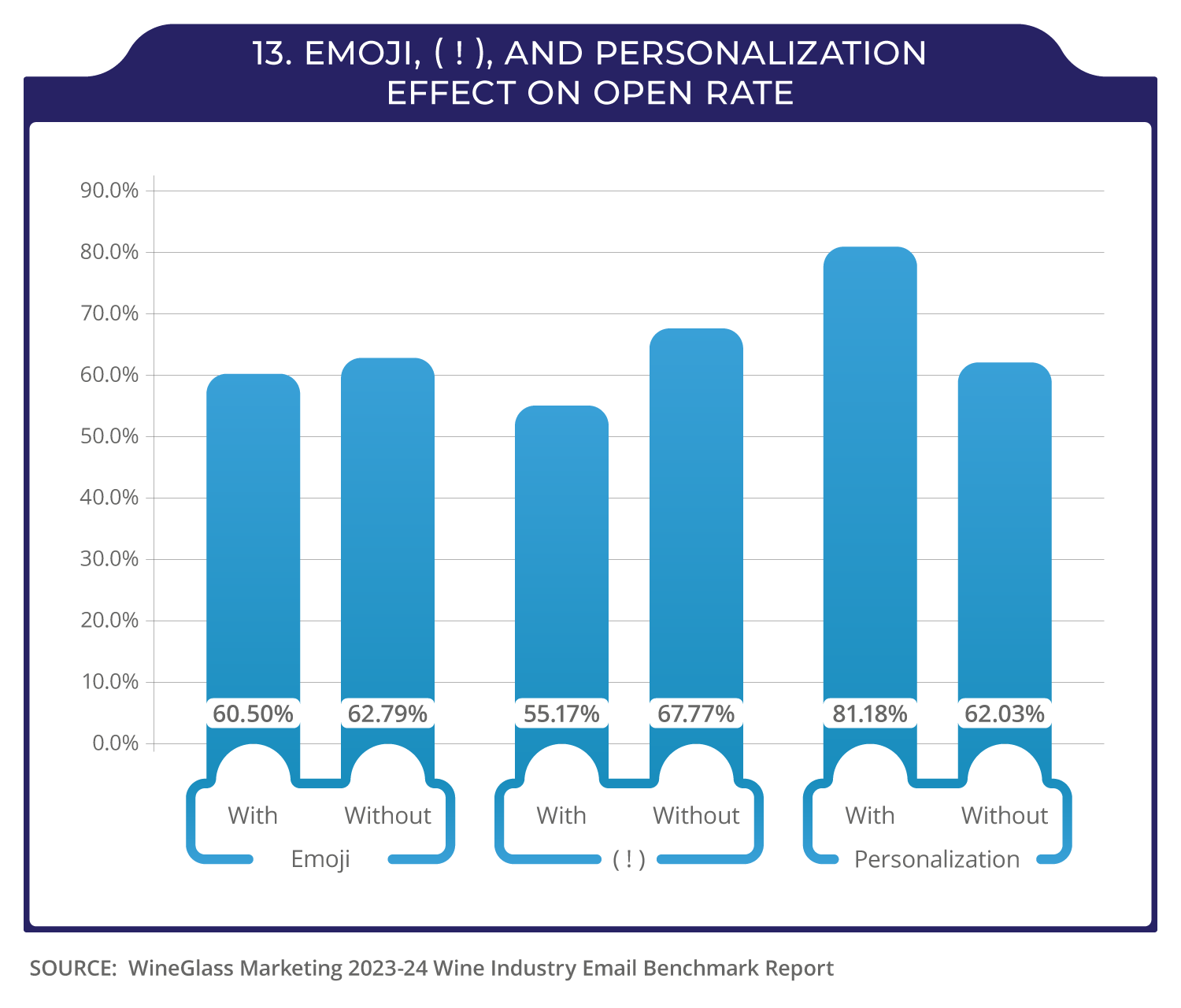
Each is specific, grounded, and human. According to GetResponse’s 2024 benchmark report, subject lines with time-based or personalized language lift open rates by 22%. Our own benchmarks shows that yelling, in fact, doesn’t work. Subject lines without an exclamation mark (!) saw 23% greeter open rates that subject lines with one.
Teaser (preheader) text: It’s the unsung hero of open rates. The teaser should extend the subject line, not repeat it. If your subject says “Gift Sets Ship Free This Week,” your teaser should say “Send a bottle they’ll actually want to open.”
Subject + preheader = a complete thought. Together, they create the emotional and functional hook that gets you opened in a sea of sameness.
Dynamic Content, Smart Segmentation, and Knowing Your Numbers
Once you’ve earned the open, the content needs to feel personal—and that means segmentation and data awareness.
You can’t talk to everyone the same way. Club members aren’t first-time buyers. A loyal Cabernet drinker doesn’t need to be told you have a Rosé. Use dynamic content to adjust messaging and visuals automatically: feature different products, incentives, or even shipping reminders based on the recipient’s history.
But personalization is meaningless if your product mix doesn’t meet customer needs. Know your average order value (AOV)—and build gift sets around it. If your AOV is $95, have one option at $75, one near $100, and one around $125. This creates natural “upgrade” moments while giving shoppers confidence they’re choosing the right level of generosity.
Offer variety by price tier, not by chaos: “Gifts Under $75,” “Collector’s Sets,” and “For the Table.” When customers are stressed, simplicity converts.
GetResponse found that targeted and segmented campaigns generate up to 60% higher revenue than generic blasts. The bottom line: fewer, smarter sends that match intent.
Starting December 2: Turning the Noise Into Strategy
Let’s assume the calendar reality: it’s Tuesday after Thanksgiving, and your audience is exhausted. They’ve been hit with five days of deals, countdowns, and faux urgency. Your move now is not to join the shouting but to pivot to relevance.
From here on out, the tone shifts from hype to help.
- Week 1 (Dec 2–6): Lead with reassurance. Highlight clear shipping deadlines, elegant gift options, and peace-of-mind language. “Order by Dec 15 for guaranteed arrival” performs better than “LAST CHANCE.”
- Week 2 (Dec 9–13): The emotional pivot. Focus on meaning: “Wines that bring everyone to the table.” People are looking for heart, not hustle.
- Week 3 (Dec 16–20): Local pickup, gift cards, and time-sensitive perks. Urgency returns, but keep it dignified—precision, not panic.
- Week 4 (Dec 21–31): The thank-you window. “A Toast to You” or “From Our Cellar to Your Table” closes the season gracefully while teeing up New Year’s campaigns.
Your audience doesn’t need another email yelling “Buy Now.” They need one that helps them feel competent, calm, and on schedule. If you send thoughtfully during this period, you’ll avoid fatigue and train your audience to associate your emails with useful timing rather than background noise.
The Campaign Needs a Theme, Not a Pulse of Panic
The most common mistake wineries make is building a series of emails instead of a campaign with a story. A string of emails isn’t a campaign—it’s clutter. Consumers don’t experience your December emails as separate communications; they experience them as an ongoing conversation. Cohesion creates memory, and memory drives action. Think in themes, not tactics.
Pick one story arc and build around it:
- “The Gift of Together” – highlight shared meals, connection, and gratitude.
- “From Our Cellar to Your Table” – pairing stories, limited releases, and recipes.
- “Twelve Days of Sparkle” – a countdown celebrating different reasons to open bubbles.
- “Now Everyone’s Included” – show the range of your offerings from low alcohol to bold reds.
Each send becomes a chapter – not a new pitch. Same tone, same design family, same emotional through line. This makes your emails recognizable, even when unopened—and that visual recall is what keeps your brand top of mind when everyone else blurs together. Anchor the visuals, tone, and copy so they evolve but remain recognizable. That consistency builds familiarity, and familiarity builds conversion.
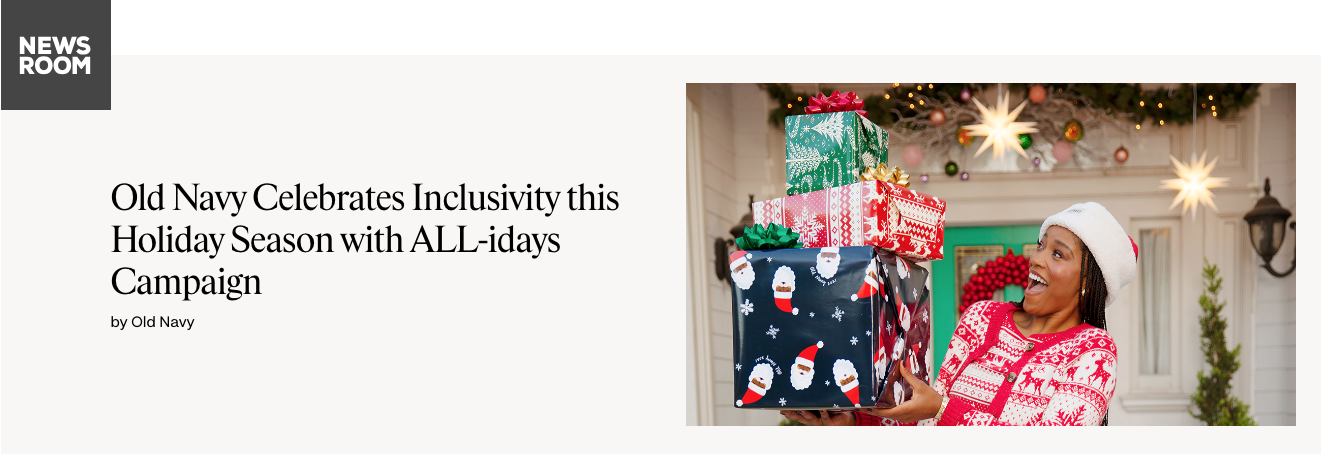
A great example of a cohesive campaign theme in action comes from Old Navy’s Happy ALL-idays initiative. Rather than releasing a string of disconnected promotions, Old Navy built an entire narrative around inclusion, joy, and cultural representation. Every element—from its Inclusive Santa Activation to its Santa BOOTcamp and diverse media creative—connects back to one central idea: reimagining the holidays to celebrate everyone’s traditions. The result isn’t just a campaign; it’s a movement that aligns brand values, storytelling, and community engagement. Even the product line—the skin-tone Santa Jingle Jammies and multi-cultural patterns—serves the story. For wineries, the takeaway is clear: a holiday campaign should stand for something larger than sales. When your content, offers, visuals, and tone all orbit one meaningful theme, your brand earns attention not because it’s loud, but because it’s consistent, intentional, and human.
Write for Humans, Not Algorithms
Holiday fatigue is real. Audiences are emotionally overextended, multitasking, and tired of being sold to. The average person receives over 120 marketing emails per day in December, but relevance still cuts through. According to Campaign Monitor’s 2024 data, customers who open even one personalized email are 6× more likely to purchase again.
That’s your cue: stop chasing volume and start building meaning. Holiday email marketing is not about yelling louder—it’s about speaking clearly when others have lost their voice.
So stop pitching and start conversing. Write copy that sounds like a person—not a press release. Replace “Act Now” with “Raise a Glass.” Use sensory language—flavor, warmth, ritual. Remind people that wine isn’t a transaction; it’s an experience.
And keep it brief. The average mobile user gives your email eight seconds before deciding whether to engage or delete (Campaign Monitor, 2024). Those seconds decide your revenue.
Restraint Is the New Aggression
You don’t outshout competitors; you outthink them. Sending every day to everyone doesn’t create impact—it creates mutiny.
Re-engagement campaigns before the holiday rush pay off. Clean your list before the holidays. Remove disengaged contacts. Suppress those who haven’t opened in six months. Even trimming 10–15% of inactive addresses can lift open rates several points, improving deliverability when you need it most. The takeaway: pruning isn’t loss—it’s strategy.
Then pace yourself. Send relevant, segmented messages that align with intent. In December, quality frequency beats sheer volume every time.
Measure Like You Mean It
Data isn’t decoration—it’s direction. During the holidays, you’re not looking for perfection; you’re looking for trends.
Here’s where your numbers should land in Q4:
- Open rate: 25–30% (minimum 20% during peak weeks).
- CTR: 3–6% for segmented campaigns.
- Revenue per email: $0.30–$0.50 baseline; $1+ for high performers.
If your numbers are off, don’t guess—diagnose. Are you hitting the right audience? Are you sending too often? Is your design driving attention to your CTA or away from it?
Stop measuring vanity metrics. The only KPI that matters is whether your emails make money without damaging your brand voice.
Keep Talking After the Champagne Pops
Most wineries go silent after Christmas. That’s a waste of momentum. Plus, customers are relaxed, reflective, and—if your product hit the mark—open to deepening the relationship. So, the post-holiday period is ripe for conversion—the recipients who just tasted your wine are the warmest leads you’ll ever have.
Follow up with a “Thank You” or “Here’s How to Enjoy the Bottle You Received” message. Invite them to join your club or subscribe for exclusive releases. The “New Year, New Cellar” moment sells itself.
Campaign Monitor’s 2024 report shows that post-holiday open rates climb as high as 28%—because the noise is gone and attention is back. Your January ROI depends entirely on how you close December.
The Hard Truth
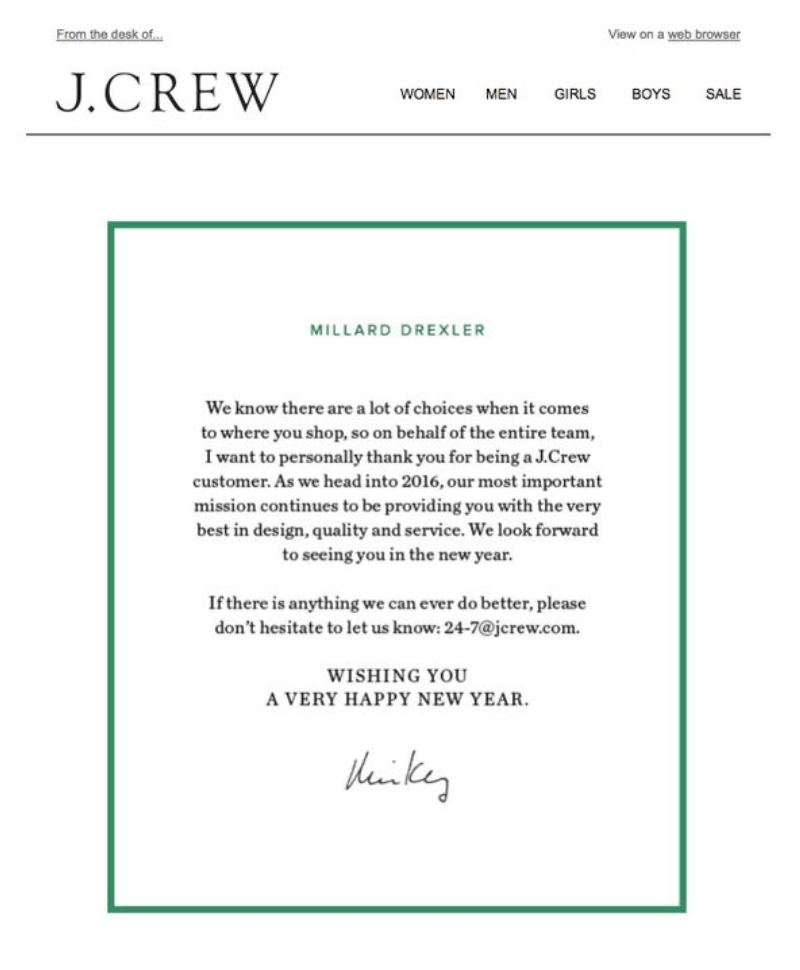
You’re not competing with other wineries. You’re competing with Amazon, Sephora, and the dopamine hit of instant convenience. The inbox is your only equalizer.
The brands that win the holiday season understand that relevance isn’t about shouting louder—it’s about sounding real. When your message feels like a breath of calm in an inbox full of chaos, it earns attention.
Because in the end, the quiet, confident voice that knows its audience always outperforms the brand that’s still yelling “BUY NOW.”
The Holiday Email Playbook, Condensed
- Lead with a trustworthy sender and a strong, specific subject line.
- Align subject and teaser text for a complete, compelling thought.
- Personalize dynamically and design for your AOV tiers.
- Start smart on December 2—pivot from hype to help.
- Build a campaign theme, not a stack of one-offs.
- Write for humans with brevity, emotion, and calm confidence.
- Keep cadence disciplined; prune your list.
- Measure what matters and learn fast.
- Follow up post-holiday to turn giftees into customers.
- Compete with noise by sounding unmistakably you.
If your winery’s emails make someone pause, breathe, and click “open” in the middle of December chaos—you’ve already won. That’s not luck. That’s strategy, empathy, and a little bit of creative rebellion.
